
Digital advertising is filled with technical jargon—DSPs, SSPs, RTB, programmatic buying, ad exchanges, and more. For many marketers, these terms can feel overly complex, yet understanding them is increasingly important in today’s media landscape.
One of the most important technologies shaping modern advertising is the Demand-Side Platform (DSP).
As digital media continues to evolve, advertisers are moving away from traditional bulk media buying toward more intelligent, data-driven buying models. At Growth Agency, we see this shift accelerating across South Africa as brands demand greater efficiency, transparency, and performance from their media investments.
The Shift from Traditional Media Buying to Programmatic Advertising
Historically, online display advertising relied heavily on manual media buying. Advertisers would purchase large volumes of impressions directly from publishers or ad networks, usually at a fixed CPM (cost per thousand impressions).
While this model still exists, it has significant limitations.
Not all impressions carry equal value. Some users are highly relevant to a campaign and likely to convert, while others may have little or no commercial intent. Traditional buying often treats these impressions equally, resulting in wasted spend.
This is where programmatic advertising changes the game.
Programmatic advertising uses automation, audience data, and machine learning to buy digital ad inventory in real time. Instead of purchasing bulk inventory blindly, advertisers can bid only on impressions that meet specific targeting criteria.
This process is commonly powered by Real-Time Bidding (RTB).
Traditional Display Advertising vs DSP Buying
Traditional display buying can create inefficiencies for both advertisers and publishers.
For advertisers, the challenge is obvious: paying the same price for impressions that vary greatly in quality and value. This often reduces return on ad spend and makes optimisation difficult.
For publishers, unsold inventory remains a major issue. Many publishers—especially smaller niche sites—struggle to monetise valuable audience segments effectively.
Demand-Side Platforms solve many of these challenges by creating a more efficient marketplace between advertisers and publishers.
What Is a DSP?
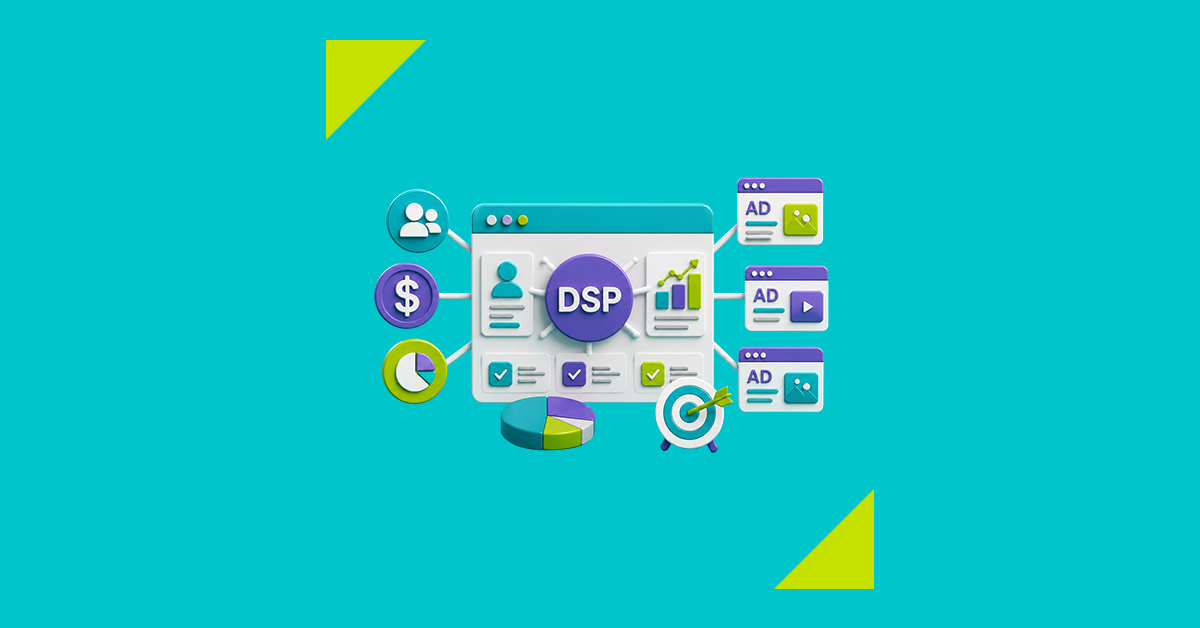
A Demand-Side Platform (DSP) is software that allows advertisers and agencies to purchase digital advertising inventory automatically across multiple publishers, ad exchanges, and networks through a single platform.
In simple terms, a DSP helps advertisers buy the right ad impression, for the right user, at the right price—within milliseconds.
Rather than manually negotiating placements, advertisers can manage campaigns from one central dashboard while using advanced targeting and optimisation tools.
A DSP typically enables advertisers to:
- Purchase display, video, mobile, audio, and Connected TV inventory
- Access multiple ad exchanges from one interface
- Bid on impressions in real time
- Optimise campaigns automatically based on performance
- Use audience data for advanced targeting and segmentation
- Track conversions, engagement, and ROI in real time
This makes DSPs a core technology within modern programmatic advertising and media buying.
How Does a DSP Work?
When a user visits a website or app with available ad inventory, an auction happens almost instantly.
Here’s a simplified process:
- A publisher makes ad inventory available through an ad exchange
- The DSP evaluates the user based on audience data and targeting rules
- The platform decides whether that impression is valuable
- The DSP places a bid in real time
- If the bid wins, the ad is served to the user
This entire process happens in milliseconds—before the webpage fully loads.
Key Features of a Demand-Side Platform
Modern DSPs provide powerful capabilities that go far beyond traditional display buying.
Centralised Media Buying
A DSP gives advertisers access to multiple inventory sources through one interface, simplifying campaign management and improving scale.
Real-Time Reporting
Campaign performance can be monitored live, allowing teams to make faster optimisation decisions.
Advanced Audience Targeting
Advertisers can target users based on demographics, behaviour, interests, browsing activity, geography, and intent signals.
Retargeting and Remarketing
DSPs enable sophisticated retargeting strategies, helping brands reconnect with users who previously visited a website or engaged with ads.
AI-Powered Optimisation
Many modern DSPs use machine learning to optimise bidding strategies, frequency, creative delivery, and conversion outcomes.
Why DSPs Matter for South African Advertisers
South Africa’s digital advertising ecosystem is becoming increasingly programmatic.
As brands demand better accountability and stronger performance from media spend, DSP adoption continues to grow across industries, including retail, finance, healthcare, education, and eCommerce.
For advertisers, DSPs offer:
- Better audience precision
- Reduced media waste
- Greater transparency
- Improved campaign performance
- Scalable cross-channel reach
For agencies, DSPs enable more strategic, data-driven media planning and optimisation.
At Growth Agency, DSP technology forms part of a broader performance marketing ecosystem that combines audience intelligence, creative strategy, analytics, and automation to maximise return on ad spend.
Final Thoughts
Demand-Side Platforms have transformed digital advertising by making media buying smarter, faster, and more efficient.
Instead of buying inventory based purely on placement, advertisers can now buy based on audience value and intent.
As programmatic advertising continues to mature in South Africa, understanding DSPs is no longer optional for brands looking to stay competitive—it is essential.
Whether you are running display, video, or omnichannel campaigns, DSP technology can unlock significantly better targeting, efficiency, and performance.